Campaign spoiler notice: this overview reveals the early Rex identity change and the later sequence of war locations. Individual character endings remain in their marked profiles.
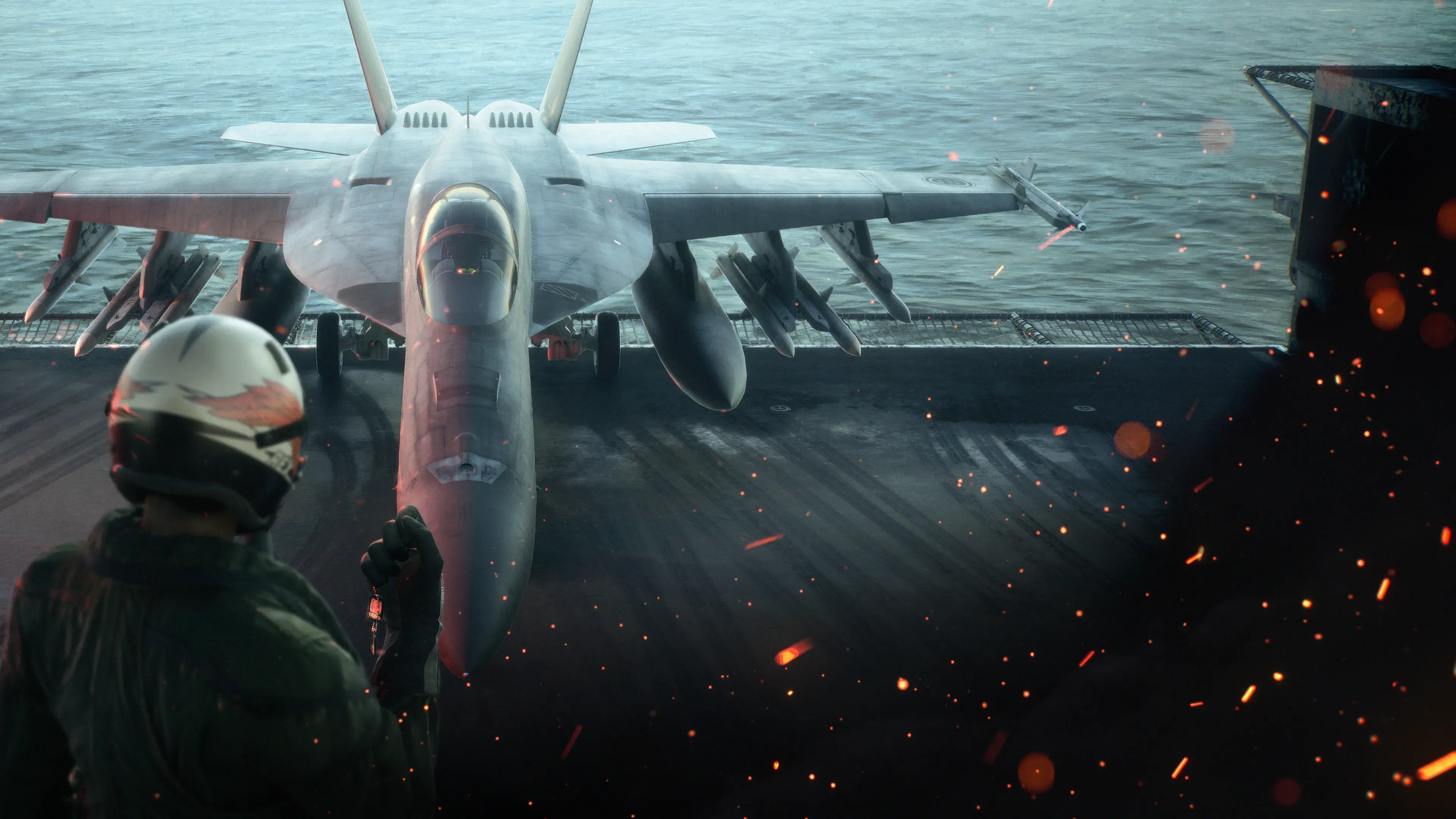
The ACE COMBAT 8 story follows the Federation of Central Usea’s fight against a Sotoan invasion in 2029. You play a surviving fighter pilot who inherits the callsign Rex and the fabricated Wings of Theve legend after its original bearer, Jan Cope, is killed. Operating from the carrier Endurance, you lead Joker Flight while a retreating navy attempts to reclaim its homeland.
The campaign tells that war through briefings, combat radio, and first-person scenes aboard the carrier. Small responses influence individual interactions, but they do not turn the main plot into a set of alternate war outcomes. This overview explains the opening premise and the structure of the conflict. It includes the early Rex identity reveal and later operation locations, while leaving detailed character endings and mission solutions to their own guides.
Place the conflict in Strangereal
ACE COMBAT 8 takes place in Strangereal, the fictional world shared by the series. Its principal conflict is the Sotoa-Usea War. The Federation of Central Usea, usually abbreviated FCU, is the homeland whose remaining forces you join. The Republic of Sotoa is the invading power. Theve is the FCU capital and the place attached to the Wings of Theve name.
The background is shaped by instability after an earlier war. The FCU has absorbed much of the Usean continent into its federation, but its central government struggles with reconstruction and economic problems. Those failures contribute to unrest within member states. Across the ocean to the east, Sotoa faces desertification and water shortages. The campaign begins against the consequences of those problems rather than against a peaceful status quo.
Keep national names separate from geographic ones. Usea is the continent; the FCU is the political federation. Sotoa is the state attacking it. Theve is a city within the invaded homeland. This distinction helps when a briefing moves between the national war effort and a local operation: defending one site is part of the larger fight for the federation, rather than a separate conflict with a different country.
| Name | Role in the story | What to remember during briefings |
|---|---|---|
| Strangereal | The wider fictional world | The campaign uses fictional states and history |
| FCU | The invaded federation | Your carrier and squadron fight for its recovery |
| Sotoa | The invading republic | Its forces drive the occupation and enemy operations |
| Theve | FCU capital | Its name gives the heroic mantle national meaning |
| Endurance | The surviving carrier | It is both an operational base and a refuge |
| Joker Flight | The player’s squadron | Its relationships connect missions to the carrier scenes |
Follow the invasion before the player becomes Wings
The Sotoan invasion begins in July 2029. The attacking force brings land battleships and an orbital weapon, the Tonitrus Spear, into a war against an already troubled federation. The FCU loses territory, its armed forces become scattered, and much of the homeland comes under occupation. The player does not enter the story at the head of an intact, confident navy.
That context explains the condition of Endurance when it rescues you. The carrier is old, crowded with refugees, and far from the front line after retreating. It carries surviving military personnel alongside civilians whose homes and lives have been disrupted. The ship is therefore more than a convenient menu location between sorties. Its passengers make the costs of the occupation visible outside the cockpit.
The story’s first movement is survival. You are recovered from the sea and brought into a force already trying to preserve what remains. Before an operation can reclaim territory, there must still be pilots, aircraft, command personnel, and people willing to keep fighting. The fleet’s weakness also explains why one celebrated pilot can carry an unusually large share of its public hope.
When an early scene discusses the navy’s losses or the carrier’s condition, read it against this sequence: an unstable federation is invaded, organized resistance fragments, and Endurance retreats with survivors. The premise is not that one new pilot caused the crisis. You arrive after the crisis is underway and inherit the task of helping an exhausted force respond to it.
Understand the replacement of the original Rex
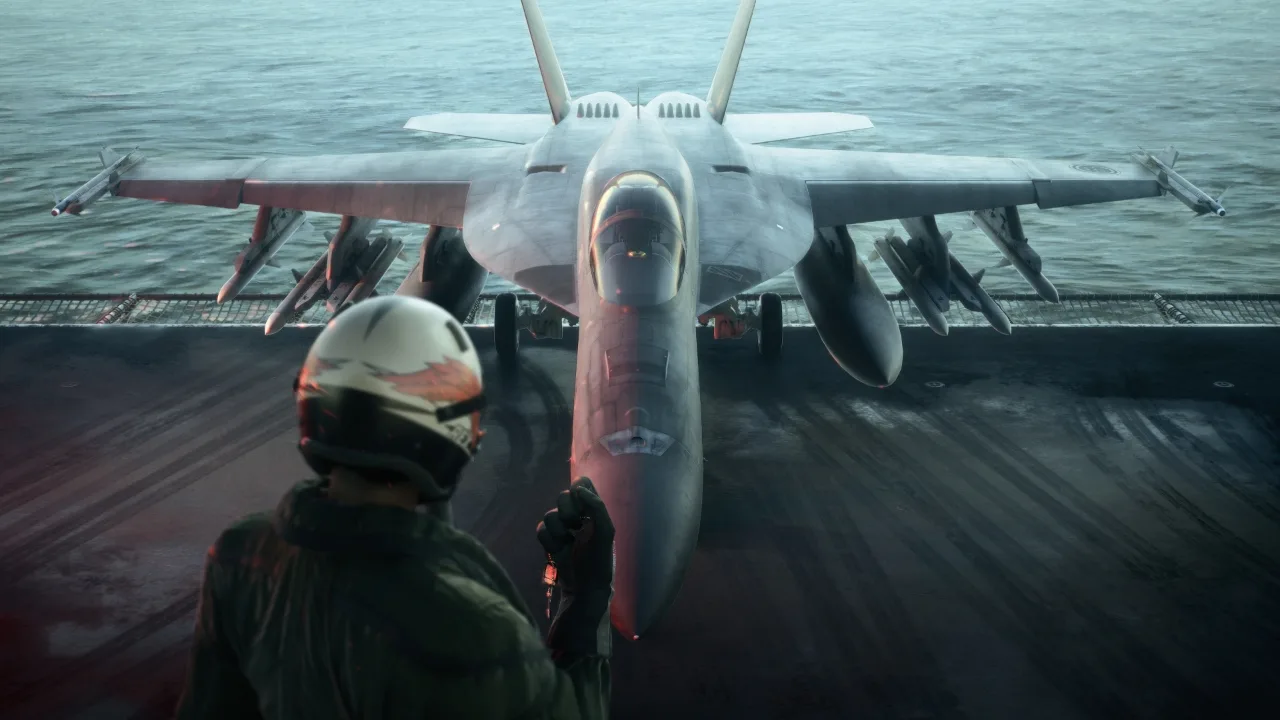
Jan Cope is the original Rex and the first pilot presented as Wings of Theve. His reputation is built as a morale tool. He possesses real skill, especially in evasion, but the public image of an extraordinary combat ace exaggerates and transforms that skill. The legend is designed to give the invaded population something to believe in.
You initially serve as his backseater. The two of you are shot down, Cope is killed, and your character survives. The wider war effort cannot easily afford to lose its symbol, so you secretly replace him, taking his callsign and mantle. That replacement is the reason the player character and Cope can both be called Rex without being the same person.
The substitution creates two connected stories. In public, Wings remains a heroic figure whose successes sustain morale. In private, a survivor must learn to lead and carry expectations created for someone else. Your later combat achievements give substance to a name that originally depended on a manufactured reputation.
This is the central identity problem of the campaign. The question is not simply whether the protagonist can defeat enough enemies. It is how a person responds to a role that other people need them to fulfill, and what happens when real acts of protection become entangled with an existing propaganda story. Keep that tension in mind whenever the radio celebrates Wings after a difficult mission.
Follow the war through 2029 and 2030
The official opening places the FCU’s collapse in July 2029. The playable campaign continues into 2030. The community-compiled campaign mission index dates the prologue to October 31, 2029 and the final numbered operation to April 1, 2030. Those are fictional operation dates, separate from the game’s 2026 release date.
The following sequence groups operations by place and period. It explains how the campaign moves through the war; it does not reproduce the complete mission checklist or tell you which targets to attack.
| Period | Campaign locations and events | Position in the sequence |
|---|---|---|
| July 2029 | Sotoa invades the FCU; surviving forces and refugees retreat | The official background before the playable operations |
| October–December 2029 | Straits of Adea, San Salvacion, Newfield Island, and repeated operations at Theve | The survivor inherits Wings while the carrier force fights through the occupied homeland |
| January 2030 | Fort Grays Island, Rio Bajo, Spring Sea, Selatapura, and Comona Space Base | The campaign expands beyond the early Theve operations |
| February 2030 | Orbiter escort in the Spring Sea, the space-bound mission at Comona, Aurum Sea, and Expo City | Space operations and attacks elsewhere become part of the continuing conflict |
| March 2030 | Two days at northern Rocky Island, followed by Crossing Fleets at Cima Island | The war advances through sustained island operations and a fleet confrontation |
| April 1, 2030 | Megafloat Fatsia, Cima Island, Theve, and Newfield Island | The final four numbered operations occur on the same fictional day |
The early Theve operations are especially useful for understanding the capital’s role. Retaking of Theve is dated November 29, 2029. Retaking of Theve II follows on December 24, and The Land Battleship Blockade is dated December 26. These are successive operations involving the same capital. A mention of Theve is therefore not enough to identify which stage of the story you are remembering.
Rio Bajo belongs to the January portion of the campaign. The People of the Lost Country and Two on the Run are dated January 11 and 12, respectively. The later January operations move through the Spring Sea and Selatapura, then include Moonlight and Shadows at Comona Space Base on January 29. Keeping that order helps separate the carrier crew’s earlier experiences from the space-related operation that follows in February.
The Star-Bound Bird is dated February 8 at Comona Space Base. It comes after Escort Orbiter in the Spring Sea on February 4. Those two operations establish a space-flight sequence within the larger war, rather than an unrelated side story inserted before the invasion. Baxter’s individual role and what those events mean for him belong in his spoiler-marked character profile.
The northern Rocky Island battles occur on March 15 and 16. Crossing Fleets follows on March 24 at Cima Island. This places the fleet confrontation after the two-day island battle and before the April endgame. The ordering matters when a character discussion refers to a late-war loss: it should be attached to that part of the campaign, rather than folded into the opening carrier introduction.
The final numbered operations are Fatsia, The Ocean Fortress; A Thousand Points of Light; Selene; and Song of Wings. Their listed locations move from Megafloat Fatsia through Cima Island and Theve to Newfield Island, all on April 1. The mission chronology establishes that sequence. It does not, by itself, establish the exact terms of a peace settlement, a new international border, or every surviving character’s future, so those outcomes should not be invented from the location list.
Across these stages, follow the strategic purpose described in each briefing and the people responding over the radio. A changing operation can bring a squadron from a planned attack into an immediate rescue or defense. The war timeline explains where the operation sits; the briefing and dialogue explain what the participants are trying to achieve there.
Recognize the enemy pressure surrounding the legend
The campaign’s opposition includes the elite Sotoan squadron Lux Lunae, called the Shadows by FCU forces. Girish Toprak, associated with Shadow 22, is among the adversaries connected to the hunt for Wings. Carmille Tewy is a Sotoan general and strategist associated with the squadron’s command. Their roles put pressure on both the military operation and the symbol carried by the player.
The existence of an enemy ace hunting Wings makes the reputation dangerous as well as useful. If the FCU draws confidence from a particular pilot’s survival, the enemy gains something by removing that pilot. Fame changes the stakes of a dogfight: it may threaten confidence across the forces listening to the same story.
Avoid assuming that every enemy reference to Rex concerns the protagonist’s original identity. The hostile forces are often responding to the inherited public reputation. The new pilot’s private history and the name recognized by the enemy are different things. That mismatch is part of what makes the replacement consequential.
Individual biographies explain why certain confrontations carry more emotional weight, but the broader campaign can be understood without turning this page into a roster of personal histories. For the war overview, remember who invades, who remains to resist, and why destroying Wings would matter to people beyond the two aircraft in the encounter.
Follow the first-person carrier scenes
The campaign presents much of its between-mission story from the protagonist’s viewpoint. Instead of watching every event from a detached camera, you are placed in rooms, briefings, and carrier spaces with the people who fight alongside you. This brings the conditions aboard Endurance into the same perspective as the flying.
The silent protagonist still participates. Some scenes offer brief yes-or-no responses or prompts to look around and interact. On PlayStation, the described presentation uses the DualSense’s directional pad and context prompts, but the narrative function is more important than copying one platform’s buttons: you respond within the scene rather than selecting an entirely different campaign.
Pay attention to the context around a prompt. A squadmate asking permission to help allied pilots expresses a personal priority within the current operation. Your response can change how that person reacts to you. It does not establish that the invasion will end differently or that every interaction is a hidden branch toward another finale.
For a first playthrough, avoid skipping all carrier scenes just because the next combat objective is already visible. They explain why particular voices matter when the same people appear over the radio. The practical benefit is narrative clarity: you will recognize the person making a request and understand why the request has significance for your squadron.
Use combat radio to follow the human side of operations
Mission radio carries both instructions and story. Commanders relay objectives, squadmates react to threats, and other allied forces report what is happening around them. The plot continues while you fly; it is not confined to the cinematic immediately before or after a sortie.
Listen for a distinction between orders and reactions. An instruction explains what the operation needs you to accomplish. A plea from threatened ground troops explains what failure means to the people in that situation. A squadmate’s comment can reveal how your leadership is being perceived. All three may occur during one stretch of combat.
The campaign can also acknowledge help given to particular allied groups. A later appearance or response from those people creates continuity between missions. That continuity makes the war feel populated by individuals rather than by a new set of anonymous targets in each operation. It should not be expanded into an unsupported claim that every rescued unit generates a permanent upgrade or reward.
If you miss part of a conversation during an intense engagement, use the surrounding scene and the mission’s stated goal to restore context. Replaying an operation for its radio dialogue is a way to understand a moment you overlooked, not evidence that you must achieve a hidden dialogue completion percentage to finish the main story.
Keep campaign relationships separate from alternate outcomes
Joker Flight’s reactions give leadership a personal dimension. The squad spends time with you in briefings, aboard the carrier, and in combat, so small choices can shape individual exchanges. The campaign presents those moments as part of your experience of commanding a group whose members have their own interests.
The main story remains directed. A yes-or-no prompt is not enough to establish a branching ending, an optional war route, or a romance system. Read each interaction according to what it actually changes on screen. When a pilot appreciates your permission to help someone, the supported outcome is that response and the action in that scene.
This distinction lets you follow the campaign without treating every conversation as a puzzle with one correct answer. Make the response that fits your reading of the situation, watch how the people around you react, and continue following the shared war effort. The protagonist’s identity develops through those relationships while the principal invasion and resistance story continues.
For a clear campaign reading, retain four anchors: Sotoa’s invasion, Endurance’s surviving community, the transfer of Wings from Cope to the new Rex, and Joker Flight’s effort to reclaim the homeland. The briefings explain the changing operation; the carrier scenes and radio show what that operation asks of the people carrying it out.