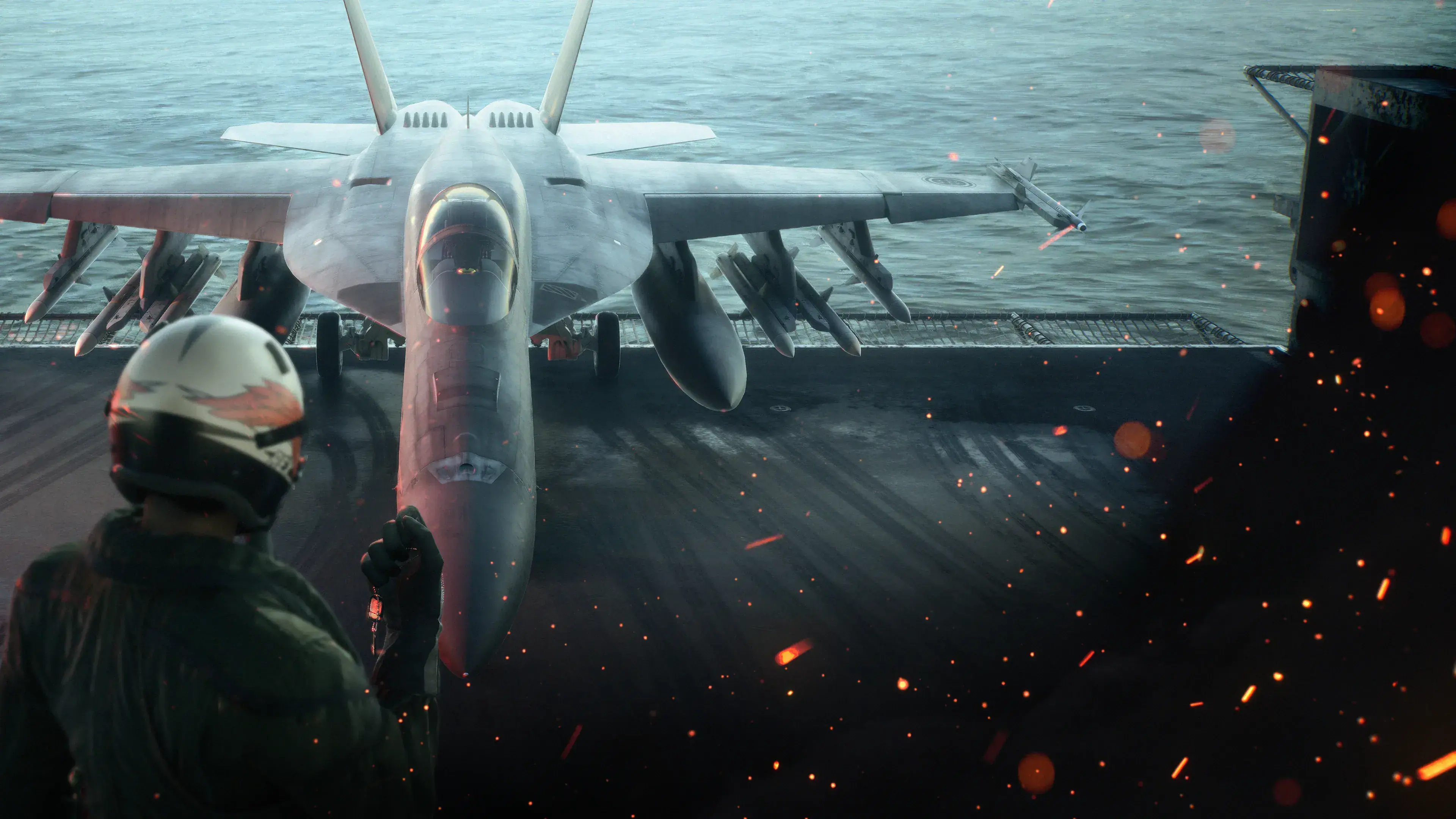
ACE COMBAT 8: WINGS OF THEVE has a prologue followed by 30 numbered campaign missions. The campaign begins with Wings of Theve, then runs from Jokers Wild through Song of Wings. Missions move between air defense, escort, ground attack, fleet combat, large-target assaults, and climactic dogfights.
Use the list below to check your campaign position or identify a mission for replay. Mission titles, operations, dates, and locations are factual campaign details. The strategy sections are recommendations: aircraft availability, difficulty, optional targets, and your goal—first clear or high rank—can change the best approach.
This page covers the single-player campaign. ACE COMBAT ONLINE has separate missions, aircraft acquisition, progression, and save data; completing online sorties does not advance this campaign list.
Dedicated routes are available for Mission 8, Mission 15, Mission 16, Mission 27 and Mission 28 S rank. For collection replays, use Aces or medals.
Version scope — October 7, 2026: This page was edited from supplied research. No numbered game build or independent playtest is recorded for this guide. Check the current in-game descriptions and your platform before applying build-sensitive conditions.
Campaign structure at a glance
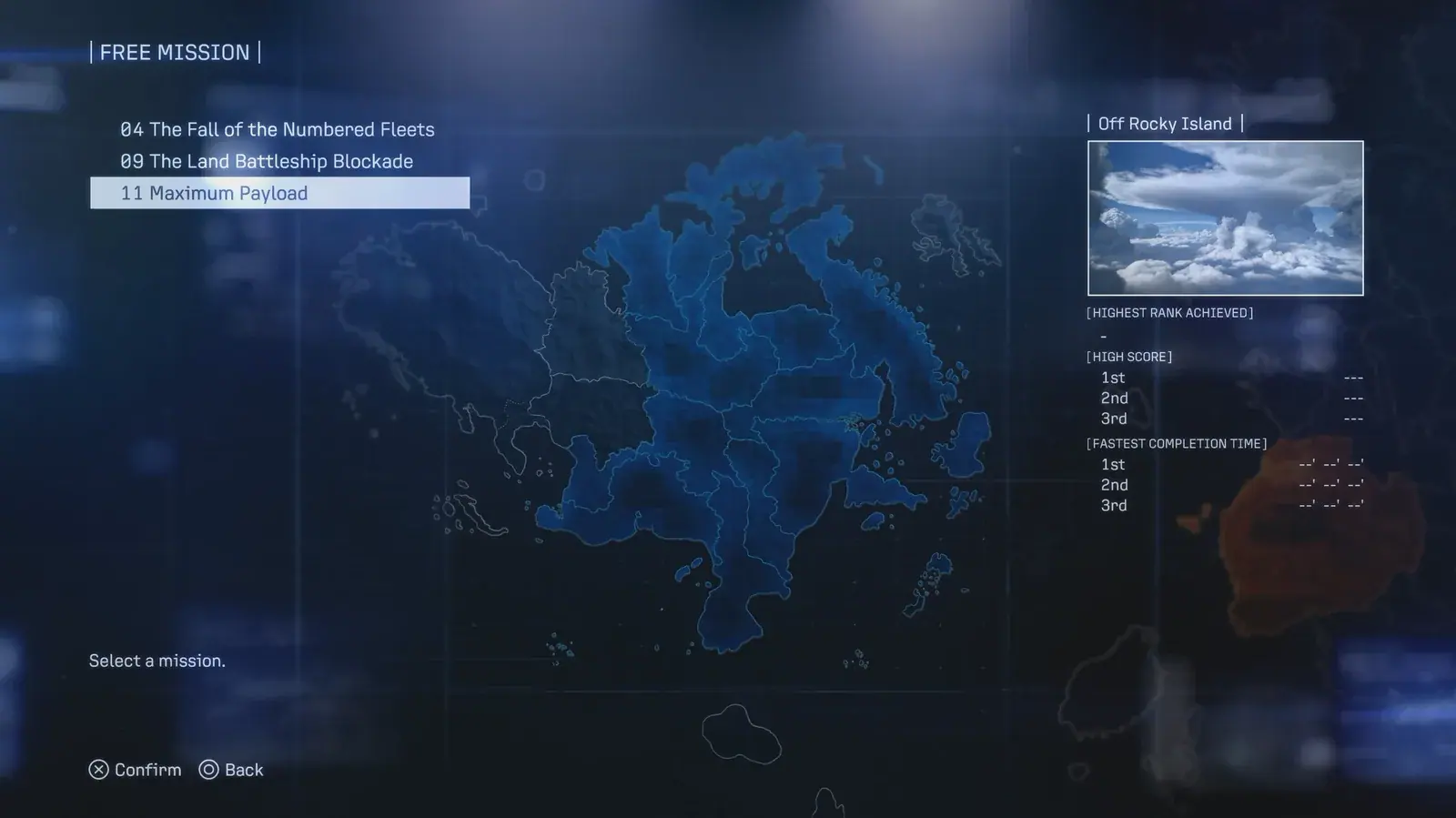
The Free Mission menu lets players review and replay completed campaign missions.
The prologue takes place on October 31, 2029. The numbered campaign starts the next day and concludes with several operations on April 1, 2030. Some consecutive missions revisit the same theater, but a repeated location does not mean the objectives or target mix will be the same.
The game also supports campaign replays and Free Mission play. Those are useful when you want to return with a different aircraft, test another special weapon, hunt optional aces, or attempt higher ranks without treating every objective as part of one continuous first playthrough.
Complete Ace Combat 8 mission list
The titles themselves reveal locations and late-campaign progression, so stop at your current mission if you want to avoid even light structural spoilers.
| # | Mission | Operation | Date | Location |
|---|---|---|---|---|
| Prologue | Wings of Theve | Escort of Air Ixiom Flight 365 | October 31, 2029 | Straits of Adea |
| 01 | Jokers Wild | Operation Seabird | November 1, 2029 | San Salvacion North Coast |
| 02 | Nomad | Operation Falling Sparks | November 1, 2029 | Deltheim Port |
| 03 | Purple Magic Takes Flight | Operation Frostwave | November 5, 2029 | White Valley Base |
| 04 | The Fall of the Numbered Fleets | Operation Elder Hand | November 12, 2029 | Newfield Island |
| 05 | Retaking of Theve | Operation Long Shot | November 29, 2029 | Theve |
| 06 | Attack on the Drinwich Airfield | Operation Redouble | December 6, 2029 | Rigley Mountains |
| 07 | A Lifeline in the Desert | Operation Squeeze | December 9, 2029 | Faith Park Ravine |
| 08 | Retaking of Theve II | Operation Gut Shot | December 24, 2029 | Theve |
| 09 | The Land Battleship Blockade | Operation Ogre Pitfall | December 26, 2029 | Theve |
| 10 | Over the Rainband | Operation Raincoat | December 31, 2029 | Waters of Newfield Island |
| 11 | Maximum Payload | Operation Gaffed Card | January 4, 2030 | Off Rocky Island |
| 12 | An Island in Darkness | Operation Worker Bee | January 4, 2030 | Fort Grays Island |
| 13 | The People of the Lost Country | Operation Twin Birds | January 11, 2030 | Rio Bajo |
| 14 | Two on the Run | Operation Homing Pigeon | January 12, 2030 | Rio Bajo |
| 15 | Wings of Wax | Operation Deal Cards | January 28, 2030 | Spring Sea |
| 16 | Singer | Operation Lighthouse Lady | January 28, 2030 | Selatapura |
| 17 | Land Battleship No. 3 | Operation Broncobuster | January 29, 2030 | Waiapolo Mountains |
| 18 | Moonlight and Shadows | Operation Branching Path | January 29, 2030 | Comona Space Base |
| 19 | Clearing the Lighthouse | Operation Silver String | January 31, 2030 | Selatapura |
| 20 | Escort Orbiter | Operation Migration Keeper | February 4, 2030 | Spring Sea |
| 21 | The Star-Bound Bird | Operation Dawn Rising | February 8, 2030 | Comona Space Base |
| 22 | Pursuing the HSCA | Operation Patch of Blue | February 10, 2030 | Aurum Sea |
| 23 | The Destruction of Expo City | Operation Rumbling | February 22, 2030 | Expo City |
| 24 | The Battle of Rocky Island, Day 1 | Operation Coastal Hammer | March 15, 2030 | Northern Rocky Island |
| 25 | The Battle of Rocky Island, Day 2 | Operation Paint it Blue | March 16, 2030 | Northern Rocky Island |
| 26 | Crossing Fleets | Operation King Tide | March 24, 2030 | Cima Island |
| 27 | Fatsia, The Ocean Fortress | Operation Rootbreaker | April 1, 2030 | Megafloat Fatsia |
| 28 | A Thousand Points of Light | Operation Locust Purge | April 1, 2030 | Cima Island |
| 29 | Selene | Operation Lunar Eclipse | April 1, 2030 | Theve |
| 30 | Song of Wings | Operation Showdown | April 1, 2030 | Newfield Island |
How to approach the campaign
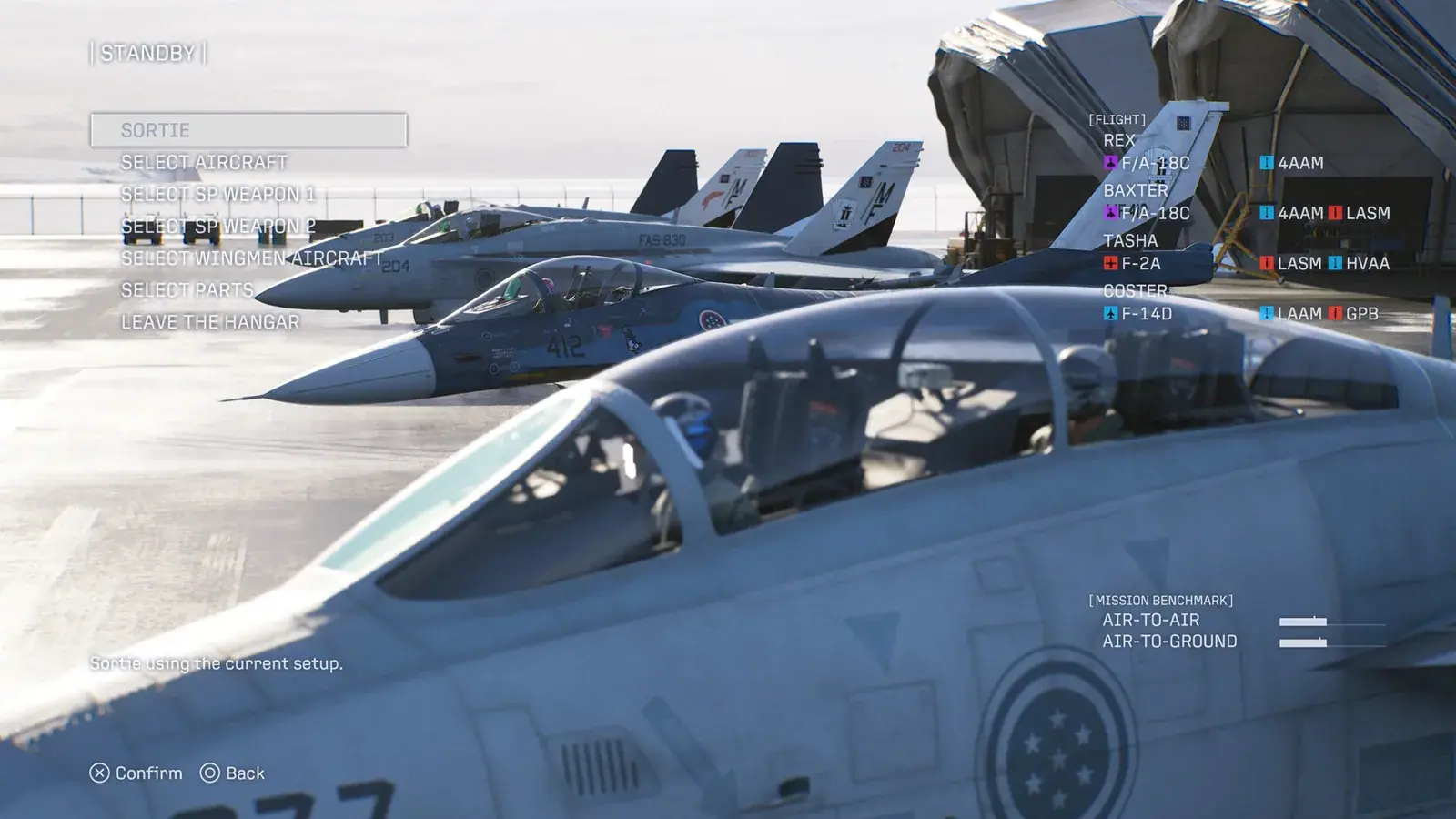
The sortie screen connects aircraft and weapon selection with mission preparation.
A first clear and a rank attempt reward different decisions. On the first run, favor a dependable loadout and preserve enough ammunition for objective changes. For a replay, you can build specifically around the mission’s known target mix and remove travel, targeting, and weapon-selection mistakes from the route.
- Read the briefing for the protected unit and required target. Escort and defense missions punish you for chasing attractive targets while bombers, helicopters, or ground weapons attack the actual objective.
- Match the special weapon to the dominant target type. Air-to-air weapons help with dispersed aircraft and interception. Area-capable air-to-ground weapons are more useful when surface targets appear in dense groups. A weapon that excels against one target can be inefficient when the mission changes phase.
- Treat wingmen as part of the sortie plan. The campaign supports active wingmen and commands. Use them to spread pressure when several groups threaten an objective, but do not assume they will automatically solve the highest-priority threat.
- Watch the objective update before committing to a distant target. Several documented missions introduce new waves or a new phase after required targets are cleared. Finish a pass in a position that lets you turn toward the next threat instead of crossing the entire combat area again.
- Use the return line when the mission provides one and your remaining ammunition justifies the travel. Rearming can stabilize a long mission, but an unnecessary trip can cost time during a rank attempt.
- Separate completion from optional cleanup. Named aces and extra enemies can add score, yet their appearance conditions may require detours, risk, or precise actions. Secure a reliable clear before combining those conditions with an S-rank route.
A practical S-rank replay method
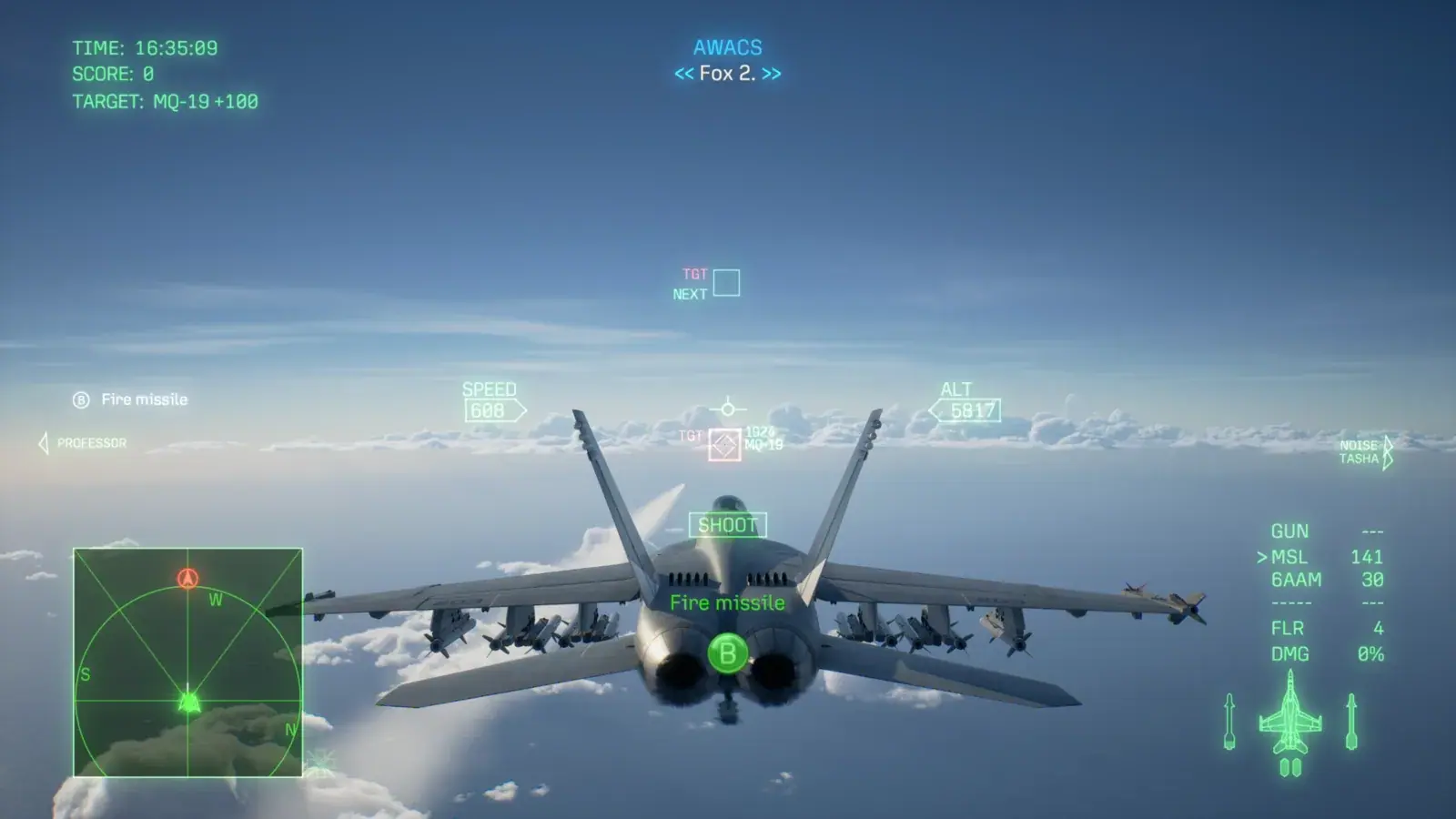
HUD markers and radar contacts help pilots compare target priority with attack timing.
Mission evaluation can reflect completion time, enemies destroyed, bonus targets, and mission-specific objectives. The balance is not identical across all missions, so there is no single supported score threshold or universal route for the complete campaign.
Use a controlled replay loop instead:
- Establish a clean completion route. Learn where required targets appear, which phase causes the greatest delay, and where you routinely run short on missiles or special weapons.
- Remove low-value travel. Attack enemies that sit along the objective route before making long detours. In timed sorties, a remote target can cost more through travel than it contributes through score.
- Prioritize efficient groups and dangerous targets. Named targets, aircraft, tightly packed surface units, and enemies directly threatening a protected unit usually deserve attention before isolated targets that require a separate pass.
- Build a score buffer without delaying the objective indefinitely. Destruction missions encourage additional kills, but required targets still control completion. Stop farming when another pass creates more time risk than useful score.
- Protect the run after a strong opening. Flares are limited. Save them for moments when several attackers have a lock or when evasion would ruin a difficult attack pass. High-G turns can break pursuit, but the speed loss can leave you poorly positioned if used without an exit path.
- Restart early after a major failure. A checkpoint restart does not automatically prevent an S rank in every mission, but it can make the evaluation harder. If a protected unit is already lost, an opening wave took too long, or an essential group escaped, a full restart is often the clearer test.
- Change the aircraft when the route remains inefficient. A strong all-purpose aircraft is not automatically ideal for dense ground formations. Precision weapons can waste time when an area weapon could remove a cluster in one pass.
Do not carry a score assumption from one mission into another. In particular, late-campaign rank attempts deserve their own routes because their phases, scoring opportunities, and restart costs differ.
What Missions 1–10 teach
The first ten numbered missions establish most of the planning problems that return later. These notes identify each mission’s central pressure without replacing a dedicated walkthrough.
| Mission | Main planning lesson |
|---|---|
| 01 — Jokers Wild | Follow the tutorial flow, clear the fighter threat efficiently, and avoid ending the mission before optional cleanup is complete. |
| 02 — Nomad | Defend the Endurance by intercepting bombers first. Fighter escorts matter, but bombers are the immediate mission threat. |
| 03 — Purple Magic Takes Flight | Track waves arriving from different directions and avoid overshooting slow helicopters or exposing the base while pursuing fighters. |
| 04 — The Fall of the Numbered Fleets | Balance airfield, ground, and fleet targets. The tunnel-related ace condition adds collision risk and is not necessary for a safe clear. |
| 05 — Retaking of Theve | Stay close enough to defend the LCACs, then alternate between aircraft and surface weapons attacking their route. |
| 06 — Attack on the Drinwich Airfield | Protect both Chinook groups instead of following only one. Clear aircraft and dangerous ground targets ahead of each formation. |
| 07 — A Lifeline in the Desert | Plan efficient passes through large surface-target groups, monitor the remaining time, and decide whether rearming is worth the trip. |
| 08 — Retaking of Theve II | Support landed forces against artillery and armor, but break away when incoming bombers become the higher-priority threat. |
| 09 — The Land Battleship Blockade | Treat the land battleship as a staged objective. Protect the bomb trucks, suppress defensive weapons, and attack exposed subsystems as they become available. |
| 10 — Over the Rainband | Keep the fleet alive while locating laser-designating airships in poor visibility. Removing an airship also restores radar coverage in its protected area. |
Planning for Missions 11–30
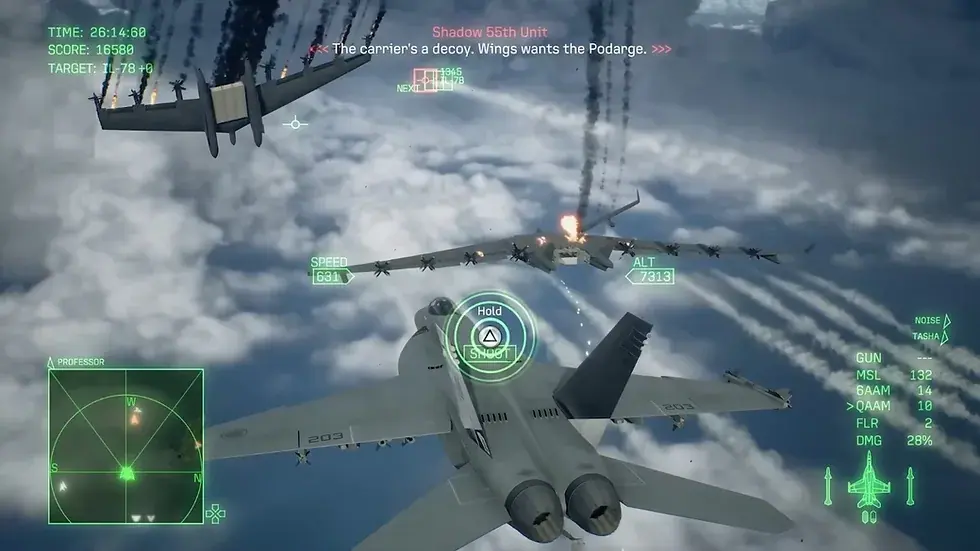
The Podarge encounter shows why large objectives may require staged attacks on multiple components.
For the later campaign, prepare for changing objective types rather than assuming that one loadout fits every mission: keep several aircraft roles available, retain funds for loadout changes, and expect consecutive missions in the same theater to demand different priorities.
Missions 15, 16, 27, and 28 require different target priorities; read each briefing before carrying over a loadout from the previous sortie. Mission 28 is also a known long-form challenge involving bomber interception, resupply decisions, and a later Shadow 22 fight. Exact S-rank thresholds and checkpoint effects are disputed in the current information, so they should not be treated as fixed rules here.
For the final stretch, complete each mission normally before combining high difficulty, optional ace conditions, and rank requirements. This preserves a known completion route and lets each replay test one change at a time.
Common campaign mistakes
- Confusing campaign and online progression. ACE COMBAT ONLINE uses separate save data and requires aircraft to be acquired within that mode.
- Using one aircraft for every target mix. A versatile fighter can complete many sorties, but clustered ground targets, fleet objectives, and bomber interceptions reward different weapons.
- Leaving the protected objective for optional enemies. Named aces and extra kills are valuable only if the mission does not fail while you pursue them.
- Hoarding special weapons without a reason. Preserve ammunition for an expected phase, not simply for the end of the mission. Unused ordnance cannot shorten an earlier bottleneck.
- Finishing a weak rank run just because it remains technically winnable. If the goal is S rank, repeated missed passes or a damaging checkpoint restart may justify starting over. If the goal is MRP or route practice, finishing can still be useful.
- Treating community timings or scores as guaranteed thresholds. Mission evaluation varies, and the available information does not resolve every claimed requirement. Record your difficulty, route, checkpoint use, destruction score, time result, and final grade when refining a run.