To perform a PSM in Ace Combat 8: Wings of Theve, use an aircraft that supports the maneuver, slow to below 500 km/h, release your speed-control input so the aircraft is briefly neutral, then press acceleration and deceleration together to enter a High-G state. Hold that combined input for roughly half a second before pitching up. As the nose approaches a vertical attitude, accelerate to recover.
The two conditions that matter most are aircraft compatibility and entry speed. Not every aircraft can perform a PSM, and being near the threshold is not enough if the speed is still above it. The maneuver also leaves the aircraft very slow, so recovery is part of the technique rather than an optional final step. Use the sequence as a controlled way to redirect the nose; do not treat it as a guaranteed missile break or an automatic win in a close-range fight.
Practice on a manageable difficulty setting before applying the maneuver in the Shadow 22 fight. The aircraft list is a roster reference, not proof that every model supports PSM.
Version scope — October 7, 2026: This page was edited from supplied research. No numbered game build or independent playtest is recorded for this guide. Check the current in-game descriptions and your platform before applying build-sensitive conditions.
Set Up the PSM Before You Pull
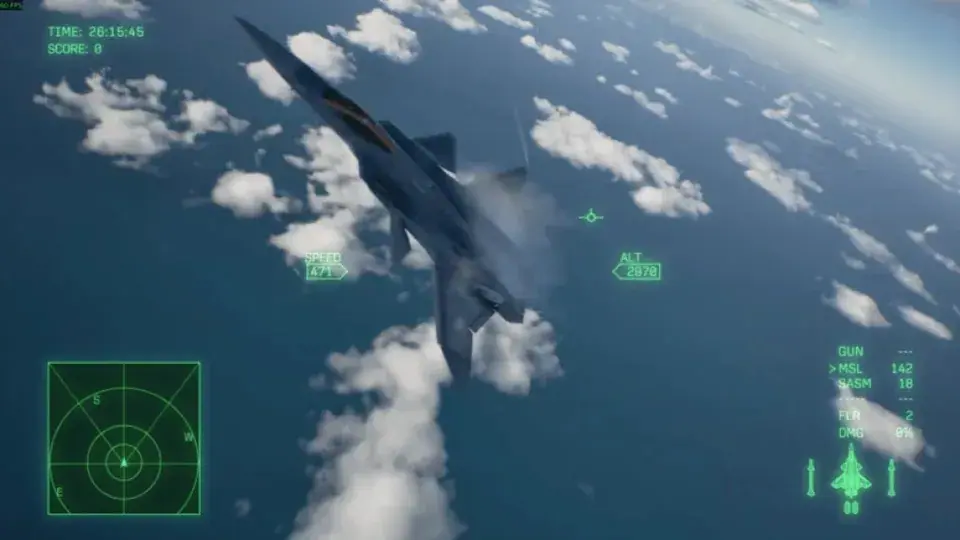
The HUD visibly shows the aircraft inside the below-500 km/h PSM entry window.
A clean attempt starts before the combined input. Choose an aircraft you have confirmed can perform a PSM, then create enough room to lose speed without immediately colliding with terrain, structures, or another aircraft. For early practice, a level attitude and open air make the input easier to read because you are not also correcting a dive or avoiding an obstacle.
Use this preparation checklist:
- Confirm compatibility. A correct input will not add PSM capability to an aircraft that lacks it. If repeated attempts fail with one aircraft, do not assume the timing is the only problem.
- Get below 500 km/h. This is the required entry-speed condition. Aim clearly below the threshold instead of hovering on it.
- Release deceleration briefly. The next input should begin from a neutral speed-control state, not from one uninterrupted braking hold.
- Keep space for recovery. You will trade speed for rapid nose movement. Low altitude gives you less time to recognize a bad attempt and accelerate out.
- Separate practice from combat. Learn the sequence where you can watch speed and attitude. A target, warning tone, or incoming missile adds decisions before the basic rhythm is reliable.
If you are approaching too fast, reduce speed first. Repeated High-G turns can help shed excess speed, but they are a setup choice rather than a required part of every PSM. What matters at the start of the actual maneuver is that the aircraft is already below the supported speed threshold and your speed-control input has returned to neutral.
The PSM Input Sequence
Think of the maneuver as four beats: slow, neutral, combine, pitch. Rushing them into one continuous pull is the most likely way to produce an ordinary High-G turn or a stall without the intended nose rotation.
- Decelerate below 500 km/h. Watch the current speed, not the speed you expect to reach after pulling.
- Release the deceleration input. Let the throttle controls return to neutral for a brief moment.
- Press acceleration and deceleration together. This initiates the required High-G input.
- Wait roughly half a second. Do not pitch up at the exact instant you press the combined input. This short delay is important.
- Pitch up while maintaining the High-G input. Use a deliberate pull rather than adding unrelated roll or yaw corrections.
- Watch the nose move toward vertical. An attitude near 90 degrees marks the transition into the post-stall portion of the maneuver.
- Accelerate immediately to recover. Do not remain passive after the nose rotation; the aircraft has lost substantial speed.
The “half a second” is a timing cue, not a reason to stare at a clock. Build a repeatable rhythm: combined input first, pitch second. If your pitch begins simultaneously with the High-G input, add a slightly more obvious pause on the next attempt. If the aircraft simply slows and hangs without giving you the desired rotation, make the sequence cleaner before making it more aggressive.
Controller and Keyboard Inputs
The maneuver is based on control actions, so follow your current bindings instead of memorizing a platform-specific button name. Identify the controls assigned to acceleration, deceleration, and pitch-up. The crucial combined action is acceleration plus deceleration; pitch-up follows after the short delay.
On a controller, practice pressing both speed controls together without accidentally adding roll. On keyboard, confirm that your acceleration and deceleration keys can be held together while you press pitch-up. Default and custom bindings can differ. If your aircraft never enters the expected High-G response, verify the actions shown in your own settings before changing the maneuver timing.
Recover Without Throwing Away the Maneuver
A PSM is incomplete until the aircraft is flying under control again. The move deliberately puts you into a very low-speed state, making acceleration essential after the rotation. Once the nose has reached the attitude you wanted, commit to recovery instead of continuing to hold the aircraft in a dramatic but vulnerable position.
Use this recovery order:
- Apply acceleration as the nose rotation finishes.
- Choose a controlled exit attitude. Avoid piling a hard roll onto the maneuver while you are still slow.
- Rebuild speed before demanding another severe turn.
- Reassess the target and terrain. The PSM may have changed where your nose points, but it may also have reduced your ability to respond immediately.
- Abort the attack if the exit is poor. A missed firing window is cheaper than forcing another low-speed input with no recovery margin.
Acceleration does not guarantee instant safety. The maneuver can leave you exposed to another aircraft, a missile, or the ground. Treat the post-rotation moment as a new tactical position that must be evaluated, not as proof that the maneuver succeeded in every practical sense.
Why a PSM Attempt Fails
Most failed attempts can be traced to one stage of the sequence. Diagnose the first thing that went wrong instead of repeating the entire input faster.
| What you see | Likely cause | What to change next |
|---|---|---|
| The aircraft makes a normal turn | You pitched before the combined High-G input had time to register | Press acceleration and deceleration together, pause briefly, then pitch |
| Nothing special happens | The aircraft may not support PSM, or the entry speed may still be too high | Confirm aircraft capability and get clearly below 500 km/h |
| The aircraft stalls without useful rotation | The inputs were mistimed, or you stayed slow without beginning recovery | Reset, use the four-beat sequence, and accelerate after the nose movement |
| The maneuver starts but the aircraft remains vulnerable | You focused on rotation and delayed recovery | Treat acceleration as the final required input |
| Attempts feel inconsistent | Your starting speed, attitude, or input rhythm changes each time | Use the same aircraft, altitude margin, entry-speed range, and sequence for several repetitions |
| You collide during or after the pull | The practice area did not leave enough recovery room | Move to open air and begin higher before repeating the drill |
Do not try to fix every symptom by holding the combined input longer. A short delay before pitching is enough; a longer hold is not guaranteed to produce a better result. Likewise, do not invent a new speed threshold from one successful attempt. The supported condition is below 500 km/h; individual runs can still differ because your attitude and timing differ.
A Repeatable Practice Drill
Consistency is more useful than one accidental success. Use a short drill that isolates the maneuver from targeting and combat pressure.
- Select a PSM-capable aircraft and enter open air with generous altitude.
- Fly level and note your current speed.
- Decelerate until the display is clearly below 500 km/h.
- Release deceleration and stabilize your hands for the next beat.
- Press acceleration and deceleration together.
- After a short pause of about half a second, pitch up.
- As the nose approaches vertical, accelerate and guide the aircraft back to controlled flight.
- Rebuild speed, return to a similar starting attitude, and repeat.
- Change only one variable after a failure: entry speed, pause length, or pitch timing.
- Once the sequence is reliable, add a target or combat pressure rather than changing aircraft immediately.
Judge each repetition by three separate results: whether the PSM began, whether the nose reached a useful attitude, and whether you recovered with space and speed. This prevents a sharp rotation followed by a crash or prolonged stall from being mistaken for a complete, usable maneuver.
A useful rhythm can be spoken internally as “below, release, both, wait, pull, power.” That phrase is practice advice, not an additional game mechanic. Its purpose is to stop the simultaneous-input step and the pitch step from collapsing together.
Using PSM in a Dogfight
The maneuver is most useful when rapid nose redirection is worth the speed loss. It can help create a new firing angle or punish an opponent that continues forward, but the outcome depends on spacing, relative speed, altitude, and what the opponent does next. PSM can be useful in PvP and difficult situations, but it does not guarantee the result.
Before committing, ask:
- Do you have recovery space? A low-altitude PSM carries an obvious terrain risk.
- Will the target remain in front of the new nose position? Rotating sharply has little value if the opponent is already extending away.
- Can you afford to become slow? An enemy outside your view may exploit the energy loss.
- Are you reacting to a missile or planning an angle? A PSM may alter your position, but it should not be treated as a guaranteed missile-lock break.
- Can you exit if the shot fails? Plan the acceleration and flight path before chasing the brief firing window.
Avoid chaining the maneuver merely because the first attempt looked successful. Recover speed, rebuild awareness, and then decide whether another high-demand turn is justified. Ordinary High-G turns remain useful for shedding speed and tightening a turn; PSM adds a more extreme low-speed nose movement, with a correspondingly greater recovery burden.